This page documents ByteRover CLI v2.6.0 and earlier. The brv push, brv pull, and /push, /pull commands described here have been deprecated in v3.0.0. For the current team sync workflow, see Team Context Sync which uses Git-Semantic version control (brv vc push / brv vc pull).
Push and pull are cloud-only, optional commands that sync your local context tree to a shared remote space. They are designed for team collaboration — your core workflow (curate and query) works fully offline without them.
Push and pull require authentication. Run /login to connect your cloud account, then /space switch to select a team space. See Local vs Cloud (v2.6.0 and earlier) for full setup instructions.

When You Need Push/Pull

Use caseWhy
Team collaborationShare curated knowledge so teammates query the same context
Multi-machine syncPush from your laptop, pull on a server or CI environment
BackupPersist your context tree outside the local .brv/ directory
If you are working solo on a single machine, you do not need push or pull. Everything curated locally is immediately queryable.

Step 1: Push to remote

In the ByteRover REPL, sync your local context tree to your remote space:
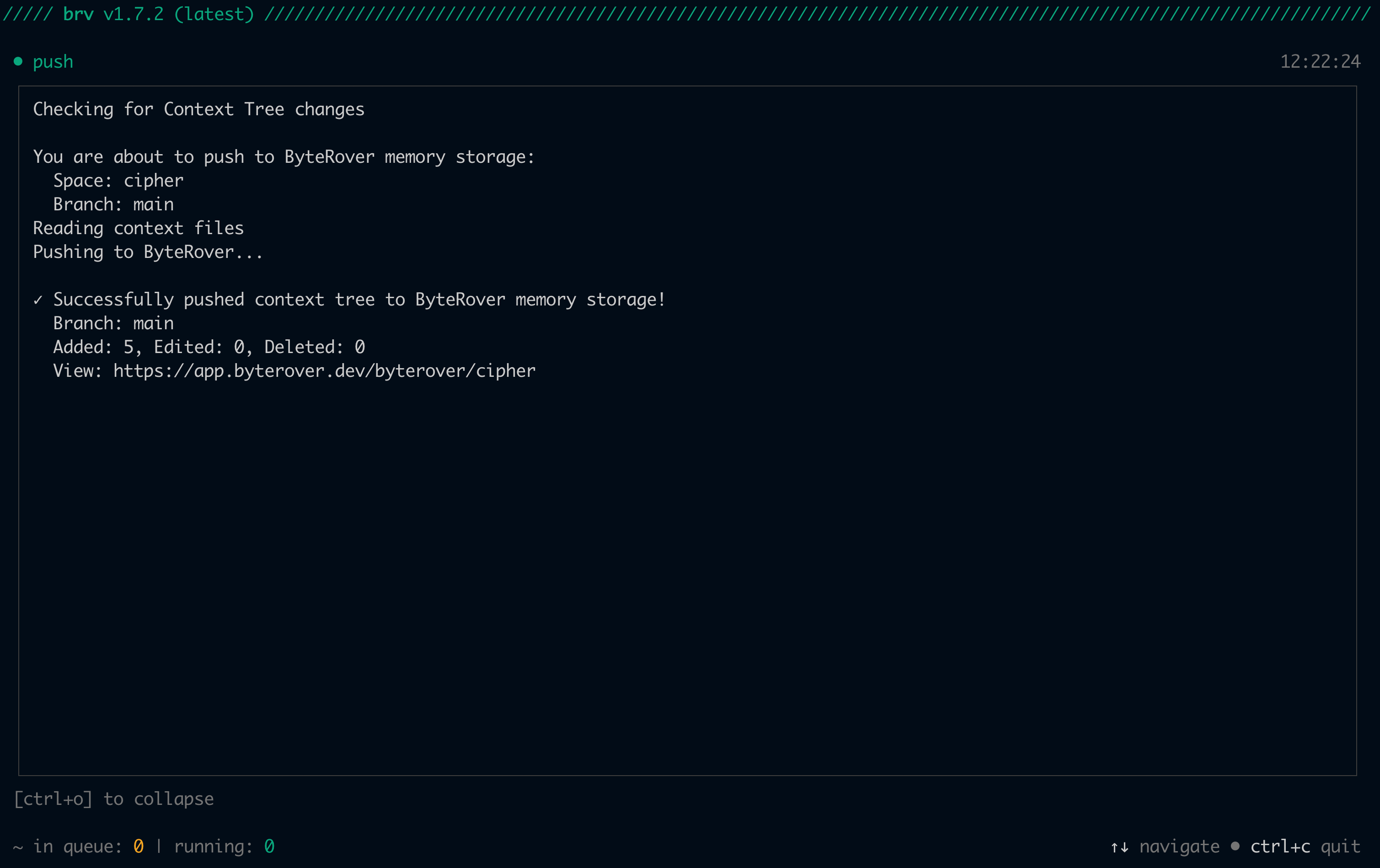
/push
Push to Remote Your context is now available to your team and persists across sessions. Push syncs to the ByteRover cloud, not to git.

Step 2: Pull team context

When teammates push context to your shared space, use /pull to sync their changes into your local context tree:
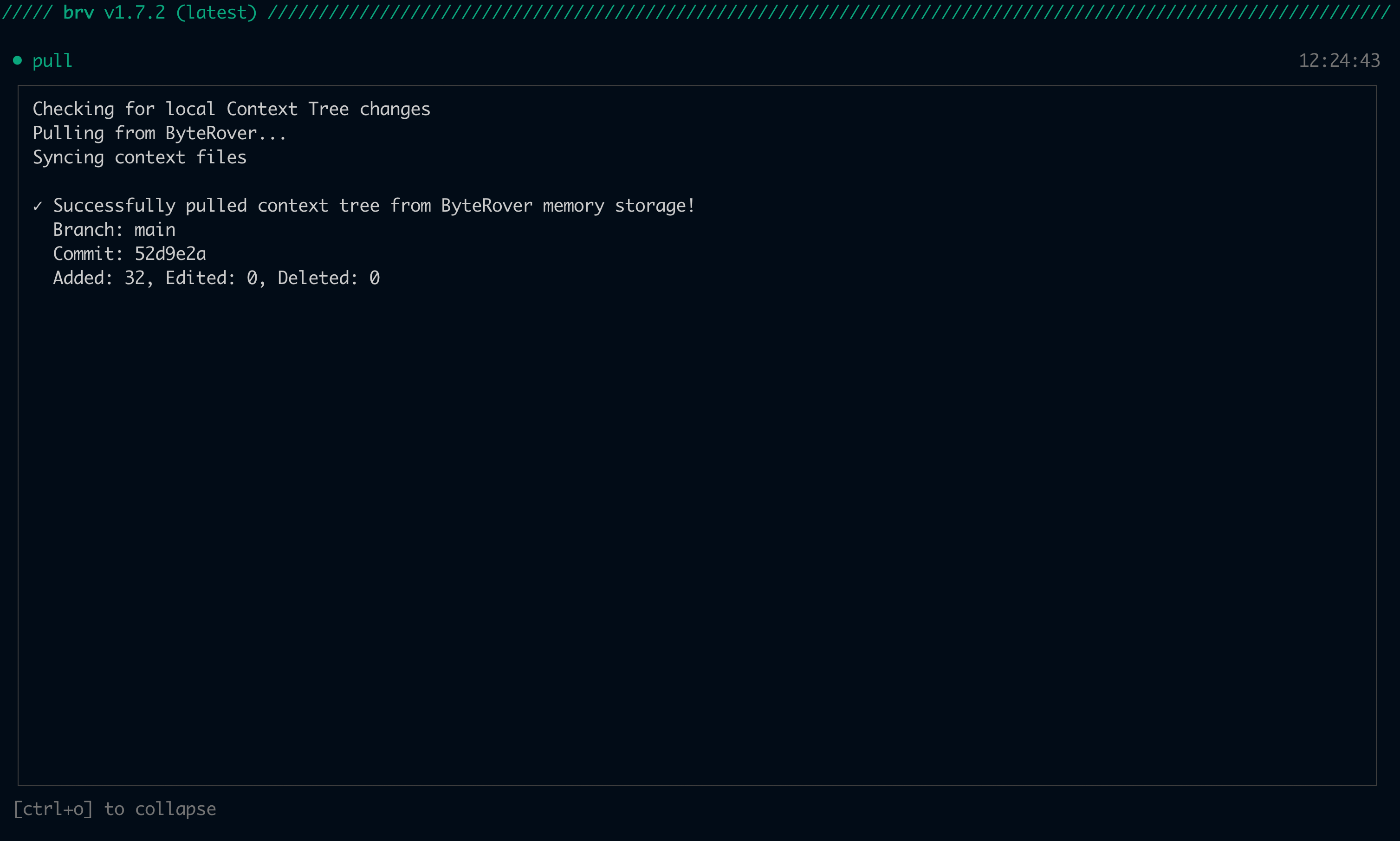
/pull
Pull Team Context Now you have access to your team’s collective knowledge. This is how ByteRover creates shared team memory.

Complete workflow cycle

The local-first flow is: curate locally → query locally → (optionally) push/pull for teams. Here is how it all fits together. Prompt your coding agent to implement a task, mentioning ByteRover:
> Add a rate limiter to the API endpoints. Use ByteRover to check existing patterns first.
Your coding agent will:
  1. Query existing context in the local context tree to understand your codebase patterns:
brv query "How are API endpoints structured? Are there any rate limiting patterns?"
  1. Implement the task using the retrieved context as guidance.
  2. Curate new context to capture what it learned:
brv curate "Rate limiting uses sliding window algorithm at 100 req/min per user. Implemented in rateLimiter.ts middleware." -f src/middleware/rateLimiter.ts
At this point your new context is stored locally and queryable. The following steps are optional and only needed for team collaboration:
  1. (Optional) Push to remote to share the new context with your team:
/push
  1. (Optional) Pull team updates to get context that teammates have added:
/pull
This creates a feedback loop where your coding agent learns from past decisions and contributes new knowledge back to your team’s shared memory.